
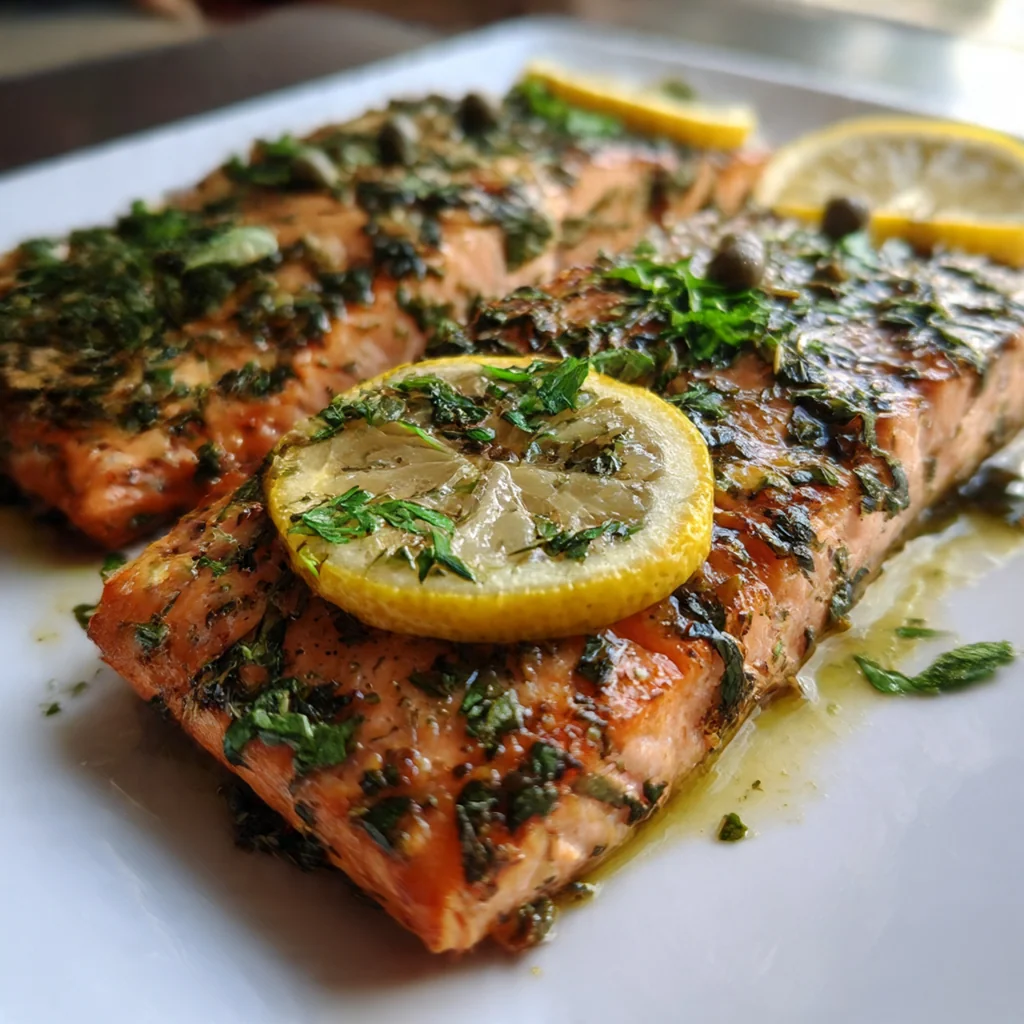
This lemon herb roasted salmon is my go-to recipe for a reason, delivering an effortlessly elegant meal that tastes like you spent hours on it. The beauty of this dish lies in its simplicity, a hallmark of modern American cuisine that focuses on fresh, high-quality ingredients. A bright, buttery sauce packed with fresh herbs, garlic, and citrus seeps into the fish as it bakes, guaranteeing a flaky, juicy result every time. You’ll find this lemon herb roasted salmon is perfect for a quick weeknight dinner but impressive enough to be the star of your next dinner party.
Why You'll Love This Recipe
- Ready in 30 minutes with almost no hands-on time
- Bright lemon and fresh herbs create a vibrant, light flavor
- Uses simple ingredients you probably already have
- Perfect for both busy weeknights and special occasions
- This is the recipe that made me fall in love with cooking fish
Ingredients You’ll Need
- Salmon fillet: A skin-on, center-cut piece ensures even cooking and keeps the fish wonderfully moist. The skin acts as a protective layer against the heat of the pan.
- Extra-virgin olive oil: Use a good quality one for its fruity flavor. It helps the seasonings adhere to the fish and promotes a beautifully golden top.
- Kosher salt: Its coarse texture makes it easy to season evenly without over-salting. It draws out moisture and enhances the natural flavor of the salmon.
- Freshly ground black pepper: Provides a gentle, pungent heat that contrasts perfectly with the bright lemon. Grinding it fresh makes a world of difference in aroma and taste.
- Medium lemon: You’ll use both the zest and slices. The zest provides intense citrus oil flavor without the sourness, while the slices infuse the fish as it roasts.
- Garlic: Finely minced fresh garlic is key. It melts into the butter sauce, adding a savory, aromatic depth that pre-minced jarred garlic just can’t match.
- Unsalted butter: This is the base of your rich sauce. Using unsalted gives you complete control over the final seasoning of your lemon herb roasted salmon.
- Fresh parsley leaves: Brings a clean, bright, and slightly peppery flavor that cuts through the richness of the butter and salmon. Always choose flat-leaf parsley.
- Fresh dill: Its slightly sweet, grassy flavor is a classic pairing with salmon. It adds a distinctive freshness that is absolutely essential to the dish.
- Fresh chives: These provide a delicate, mild onion flavor that complements the other herbs without overpowering them. Their fine texture adds a nice visual touch.
- Crushed red pepper flakes: This is totally optional but adds a subtle warmth in the background that wakes up all the other flavors. A little goes a long in this salmon recipe.
- Dry white wine: A splash of something crisp like a Sauvignon Blanc or Pinot Grigio adds acidity and complexity to the sauce, balancing the butter’s richness.
- Low-sodium chicken broth: If you’re skipping the wine, this is a great alternative. It adds savory depth to the sauce without making it too salty.
- Dijon mustard: This is the secret ingredient. It acts as an emulsifier, helping the butter and wine bind together into a cohesive, creamy sauce with a tangy kick.
- Flaky sea salt: A final sprinkle after cooking adds a delightful textural crunch and a clean, briny pop of flavor that elevates the entire dish.
How to Make It
Prepare Your Oven and Pan:
First things first, get your oven preheating to 400°F (200°C). A hot oven is crucial for cooking the salmon quickly so it stays moist inside. While it heats up, line a rimmed baking sheet with parchment paper. This is my favorite trick because it means the salmon skin won’t stick, and your cleanup will be virtually nonexistent. If you don’t have parchment, a light coating of olive oil will also work.
Ready the Salmon Fillet:
Place your beautiful salmon fillet skin-side down right in the center of the prepared baking sheet. Now for the most important prep step: pat the top and sides of the fish completely dry with paper towels. Don’t be shy, you want the surface as dry as possible. This simple action ensures the olive oil and seasonings will cling to the flesh, helping you get that lovely golden top on your lemon herb roasted salmon.
Season the Salmon Base:
Drizzle the extra-virgin olive oil evenly over the now-dry salmon. Use your hands to gently rub it all over the surface. Next, sprinkle on the kosher salt and freshly ground black pepper. Be generous here, as this is the foundational flavor layer. Finish by scattering the lemon zest over the top, gently pressing it into the flesh so it sticks. This infuses the fish with incredible citrus aroma from the very start.
Whisk Together the Garlic Herb Butter:
In a small bowl, it’s time to create the magic sauce that makes this lemon herb roasted salmon so special. Combine the minced garlic, melted butter, all your finely chopped fresh herbs—parsley, dill, and chives—and the optional crushed red pepper flakes. Pour in the dry white wine (or chicken broth) and add the Dijon mustard. Whisk it all together vigorously for about 30 seconds. You’ll see it transform into a slightly thickened, emulsified mixture where the oil and liquids are beautifully combined.
Coat the Salmon with the Sauce:
Now, spoon or brush this incredible garlic-herb butter mixture all over the top of the salmon fillet. Make sure you get an even, generous coating covering every inch of the surface. Don’t worry if some of it pools around the base of the fish on the baking sheet; this will create a fantastic pan sauce as it roasts. This sauce is what keeps the salmon juicy and packed with flavor.
Arrange Lemon Slices and Roast:
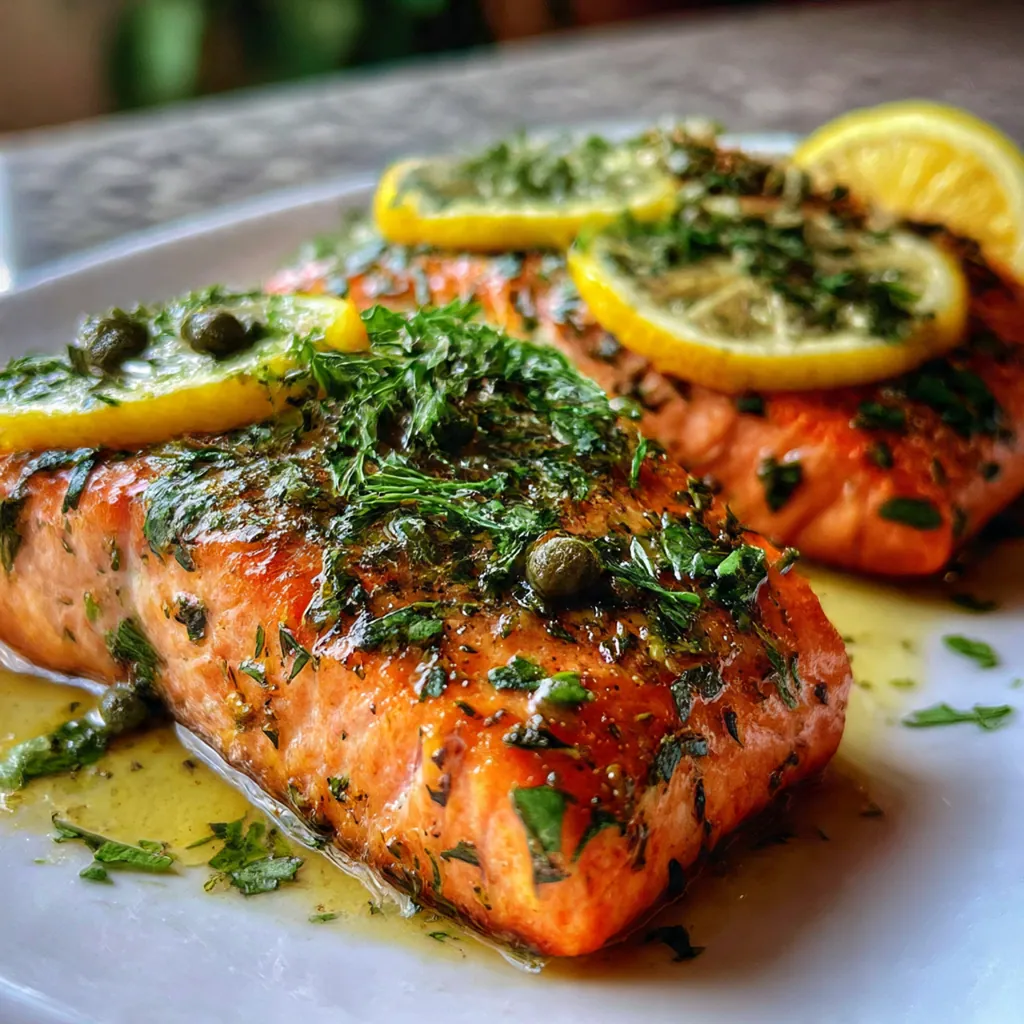
Artfully arrange the thin lemon slices over the top of the butter-coated salmon. You can place them in a single, slightly overlapping line down the center for a classic look, or scatter them across the fillet. They will caramelize slightly in the oven and infuse the fish with even more lemon flavor. Slide the baking sheet into your preheated oven and let it roast. The perfect lemon herb roasted salmon is just minutes away.
Check for Perfect Doneness:
Roast for 12 to 15 minutes. The exact time will depend on the thickness of your fillet. You’ll know it’s ready when the salmon is just opaque in the center and flakes easily when you gently press it with a fork. Look for the edges to be slightly golden and the top to be glossy. If it looks dry, it’s gone too far. For a juicier result, I always pull it when the very center still looks a touch translucent.
Get a Golden Top (Optional):
If you love a little extra color and texture, you can switch your oven to the broil setting on high for the last 1 to 2 minutes of cooking. This is a great trick for a slightly caramelized finish. However, you must watch it like a hawk. The garlic and herbs can go from perfectly toasted to burnt in a matter of seconds, so don’t walk away from the oven during this step.
Rest and Garnish Before Serving:
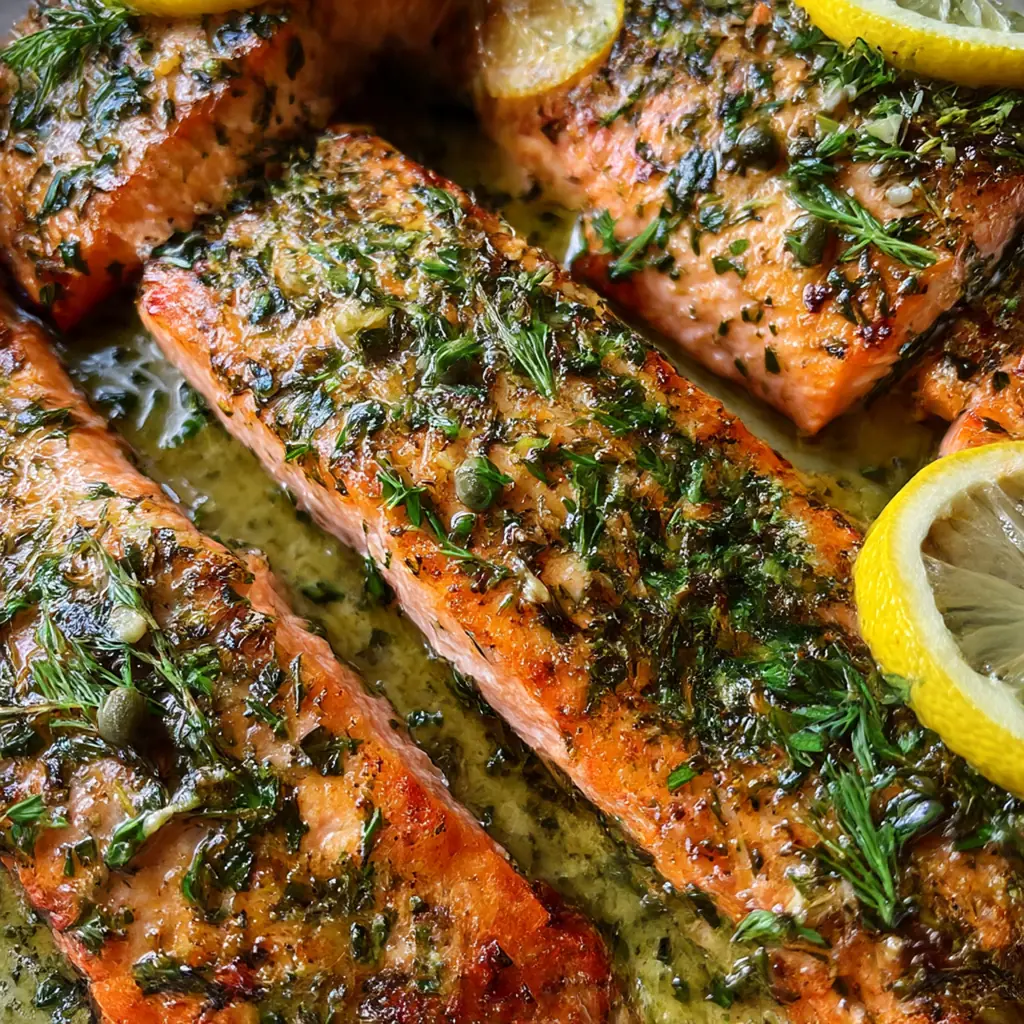
Once it’s cooked to perfection, remove the baking sheet from the oven. Let the salmon rest directly on the pan for 3 to 5 minutes before serving. This crucial step allows the juices to redistribute throughout the fillet, ensuring every bite is moist and tender. Just before bringing it to the table, sprinkle over any additional fresh herbs, a pinch of flaky sea salt for crunch, and serve with extra lemon wedges on the side.
You Must Know
- Patting the salmon completely dry is non-negotiable
- Fresh herbs make all the difference in flavor
- Don’t skip the Dijon, it holds the sauce together
- I always underbake it by a minute for the juiciest results
Storage Tips
If you have any leftover lemon herb roasted salmon, let it cool to room temperature, but don’t leave it out for more than an hour. Then, place it in an airtight container and store it in the refrigerator for up to three days. I find it reheats best in a gentle 275°F oven for about 10 minutes, which keeps it from drying out. Honestly, it’s also fantastic enjoyed cold, flaked over a big green salad for a quick and healthy lunch the next day. I wouldn’t recommend freezing leftovers, as the texture of the fish can become a bit mushy upon thawing.
Ingredient Substitutions
This recipe is wonderfully flexible. If you don’t have salmon, other oily fish like arctic char or steelhead trout would be fantastic substitutes using the same cooking time. For a dairy-free version of this lemon herb roasted salmon, you can easily replace the unsalted butter with an equal amount of good-quality olive oil or your favorite dairy-free butter alternative. Don’t have all three herbs? Just using fresh parsley and dill will still give you a great result. And remember, you can use low-sodium chicken or vegetable broth if you prefer not to cook with white wine.
Serving Suggestions
This lemon herb roasted salmon pairs beautifully with so many side dishes. I love serving it with some crispy roasted baby potatoes or creamy garlic mashed potatoes, which are perfect for soaking up any extra garlic butter sauce from the pan. For a green component, simple steamed asparagus or a crisp green salad with a light vinaigrette works wonders. If you want a heartier grain, serving the salmon over a bed of lemony couscous or herbed quinoa makes for a wonderfully complete and balanced meal that feels both wholesome and sophisticated.
Cultural Context
This style of cooking, centered on roasting fresh fish with olive oil, citrus, garlic, and handfuls of herbs, is deeply rooted in Mediterranean food philosophy. You’ll find similar preparations all along the coasts of Italy, Greece, and Spain, where the culinary focus is always on simplicity and letting pristine ingredients shine. It also fits perfectly within modern American cuisine, which embraces fresh, seasonal, and straightforward cooking methods. This lemon herb roasted salmon isn’t about complex techniques; it’s about honoring the beautiful flavor of the fish itself, enhanced by classic, vibrant pairings that feel both timeless and incredibly fresh. It’s a testament to the idea that a few well-chosen ingredients can create a truly memorable meal.
Pro Tips
- Let the salmon sit at room temp for 15 minutes for even cooking
- Use tweezers to check for and remove any pesky pin bones first
- Check for doneness at the thickest part of the fillet
- I always use a microplane for the zest to avoid any bitter pith
Frequently Asked Questions
For Lemon Herb Roasted Salmon with Garlic Butter, a 1 1/2 pound center-cut salmon fillet with the skin on works best. Center-cut pieces are more evenly thick, so they cook at the same rate and stay juicy. You can use either wild or farmed salmon; wild has a leaner, more robust flavor, while farmed is richer and a bit more forgiving. Just make sure there are no pin bones and pat the fish dry so the lemon, garlic, and butter can cling well.
You can prep most of this Lemon Herb Roasted Salmon with Garlic Butter ahead, but it’s best roasted just before serving. Mix the garlic butter with lemon zest, Dijon, wine or broth, and herbs a few hours in advance and refrigerate. You can also slice the lemon and mince the garlic. Keep the salmon covered in the fridge and wait to season with salt, pepper, and the butter mixture until right before it goes into the oven, so it stays fresh and doesn’t get mushy.
If you’re missing something for Lemon Herb Roasted Salmon with Garlic Butter, there are easy swaps. Use avocado oil instead of extra-virgin olive oil, and sea salt in place of kosher salt. If you don’t have fresh lemon, use bottled lemon juice and skip the slices. No butter? Use more olive oil. Swap parsley, dill, or chives with basil, thyme, or green onion. For the white wine, low-sodium chicken broth or vegetable broth works well, and you can replace Dijon mustard with a mild yellow or whole-grain mustard.
You’ll know Lemon Herb Roasted Salmon with Garlic Butter is ready when the top looks opaque and lightly golden and the edges are just starting to brown. At 400°F, it usually takes about 12–15 minutes for a 1 1/2 pound center-cut fillet. The flesh should flake easily with a fork and look just slightly translucent in the very center. If you use a thermometer, aim for 125–130°F for moist, medium salmon that stays tender and buttery.
Lemon Herb Roasted Salmon with Garlic Butter pairs well with simple American-style sides that soak up the sauce. Try garlic mashed potatoes, roasted baby potatoes, or buttered rice. For something lighter, serve it with steamed asparagus, green beans, or a crisp mixed green salad with lemon vinaigrette. Warm crusty bread is great for mopping up the herby garlic butter, and a glass of the same dry white wine you cooked with makes the meal feel restaurant-worthy.